Books
Literature on modelling places and systems.
Paul Edwards's 2010 history of how climate knowledge is made from models and data together, from early weather observation to global climate simulation.
A practical primer from Crooks, Malleson, Manley and Heppenstall, 2019, on building agent-based models of people in places and linking them to GIS, with worked examples in NetLogo.
Edited volume from Heppenstall, Crooks, See and Batty, 2012, collecting the foundations, methods and applications of agent-based modelling of geographic systems.
Michael Batty's 2005 account of modelling cities with cellular automata, agent-based models and fractals, the bottom-up methods under much of today's urban simulation.

Edited volume from Pourroostaei Ardakani and Cheshmehzangi, 2024, on digital twin concepts, strategies and case studies for urban planning and sustainability.
Edited volume from Farsi, Daneshkhah, Hosseinian-Far and Jahankhani, 2019, on using digital twins to monitor, diagnose and forecast city infrastructure, with attention to security.
-
Paul Cureton and Elliot Hartley's 2025 book on the tools now used to plan, map and design the built environment: urban digital twins, GeoBIM, collaborative geodesign, immersive environments and futures methods.

Epstein and Axtell's 1996 Sugarscape experiments, which showed how migration, inequality, trade and conflict can grow from simple agents on a landscape; the founding book of agent-based social simulation.
Michael Batty's 2018 book on why the future of cities can be invented but not predicted, and what that means for anyone who models them.
-
Open-access reference edited by Guo, Goodchild and Annoni, 2020, on the vision, technologies and uses of a digital model of the whole planet.
David Gelernter's 1991 book that first described software models of real places and institutions, fed by live data, that anyone could look into; the idea the digital twin of a place grows from.
James C. Scott's 1998 study of why large schemes to reorder nature and society from above have failed, and of the local knowledge their simplified maps leave out.
-
The 1972 Club of Rome report by Meadows, Meadows, Randers and Behrens that used the World3 system-dynamics model to ask whether exponential growth in population and industry could continue on a finite planet.
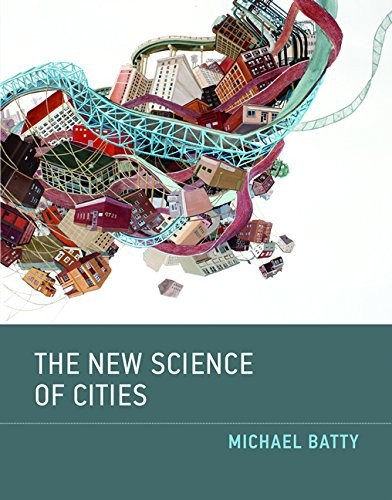
Michael Batty's 2013 argument that cities are flows and networks rather than fixed artefacts, with the models that follow from treating them that way.
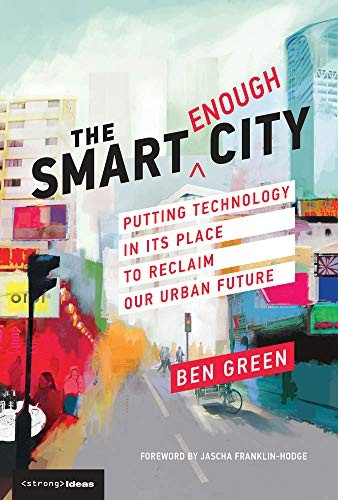
Ben Green's 2019 argument that cities should use technology as a tool for democratic and equitable ends rather than treat it as the goal, with cases of smart-city projects gone wrong and alternatives.
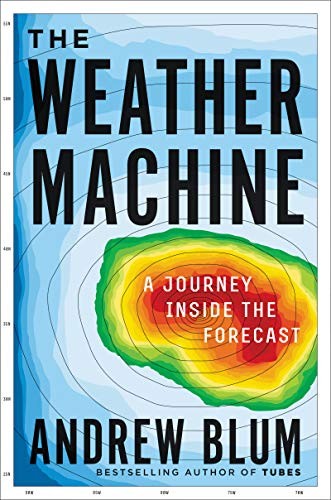
Andrew Blum's 2019 account of the global system of stations, satellites, supercomputer models and institutions behind the daily weather forecast.
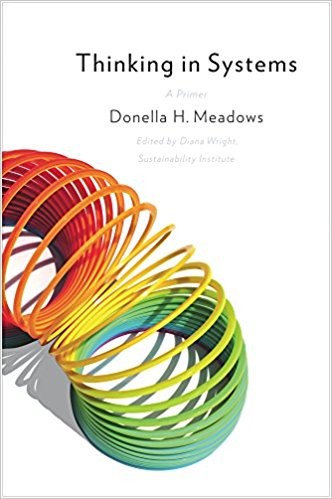
Donella Meadows's primer on systems thinking, published in 2008 from her draft manuscript, on stocks, flows, feedback and the places where a system can be changed.
-
Jay Forrester's 1969 system-dynamics model of a city as feedback loops among population, housing and industry, the first computer model to simulate a whole city's life cycle.
-
Open-access edited volume from Shi, Goodchild, Batty, Kwan and Zhang, 2021, on the data, methods and infrastructure used to sense, model and run cities.
Jay Forrester's 1971 system-dynamics model of the world as one system of population, capital, food, resources and pollution; the model behind The Limits to Growth.