book· draft
Mirror Worlds
David Gelernter's 1991 book that first described software models of real places and institutions, fed by live data, that anyone could look into; the idea the digital twin of a place grows from.
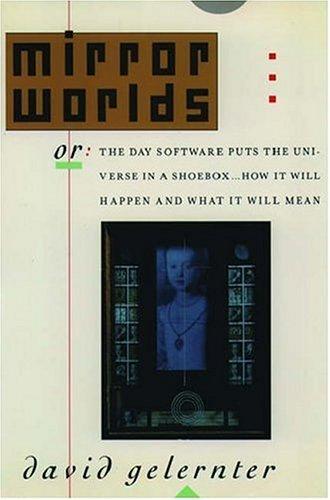
Gelernter, a computer scientist at Yale, argued that small programs were about to be joined by large public software works, and that the most important of these would be the Mirror World: a running model of a real place, a city or an organisation, that takes in a stream of live data and shows the state of the whole at this moment. A reader could look into such a model, move around in it, ask it questions and try out changes. The book spends part of its length on what this would be used for, from running a hospital to following a city council, and part on how it could be built from the technology of the time, explained through everyday analogies. First published in 1991; the paperback followed in 1992.
For anyone building a digital twin of a place this is the source text. Most of what the field now describes as a twin, the live feed, the model of the whole, the ability to ask what happens if, is set out here decades before the term existed.
Cover via Open Library.
- authors
- David Gelernter
- publisher
- Oxford University Press
- year
- 1991
- isbn
- 9780195079067
- url
- https://openlibrary.org/works/OL937468W
Tags: origin, mirror world, software, city, history