book · draft
Agent-Based Models of Geographical Systems
Edited volume from Heppenstall, Crooks, See and Batty, 2012, collecting the foundations, methods and applications of agent-based modelling of geographic systems.
Cities & placesPeople & society
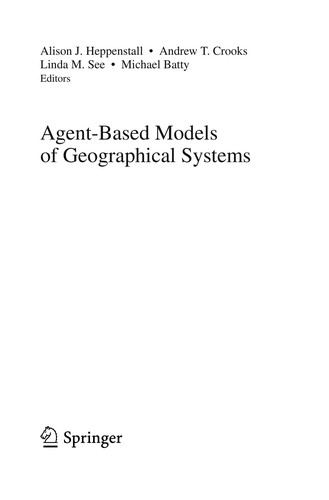
The chapters come from many research groups, and the agents in them move through geographic space. An agent-based model simulates many individual actors, each following its own rules. The book covers foundations and theory, and the technical problems particular to spatial models, such as handling scale and space. It gives practical advice on building models and keeping their complexity under control, and on methods for visualising and checking results. Applications follow, at neighbourhood and regional scales. The intended readers are researchers and graduate students in geography and spatial analysis, and practitioners in neighbouring fields.
Place-scale twins that include people, vehicles or animals as individual actors are agent-based models of geographical systems, whether or not they use the name. The book sets out what is known about building such models well, and where the hard problems lie.
Cover via Open Library.
- authors
- Alison J. Heppenstall (ed.), Andrew T. Crooks (ed.), Linda M. See (ed.), Michael Batty (ed.)
- publisher
- Springer
- year
- 2012
- isbn
- 9789048189267
- url
- https://link.springer.com/book/10.1007/978-90-481-8927-4
produced by this organization or person
-
Professor of Geocomputation at the University of Glasgow who builds spatial agent-based models and works on urban digital twins of populations.
-
Geographer at the University at Buffalo who builds agent-based models tied to real places through GIS, and co-wrote a practical primer on the method.
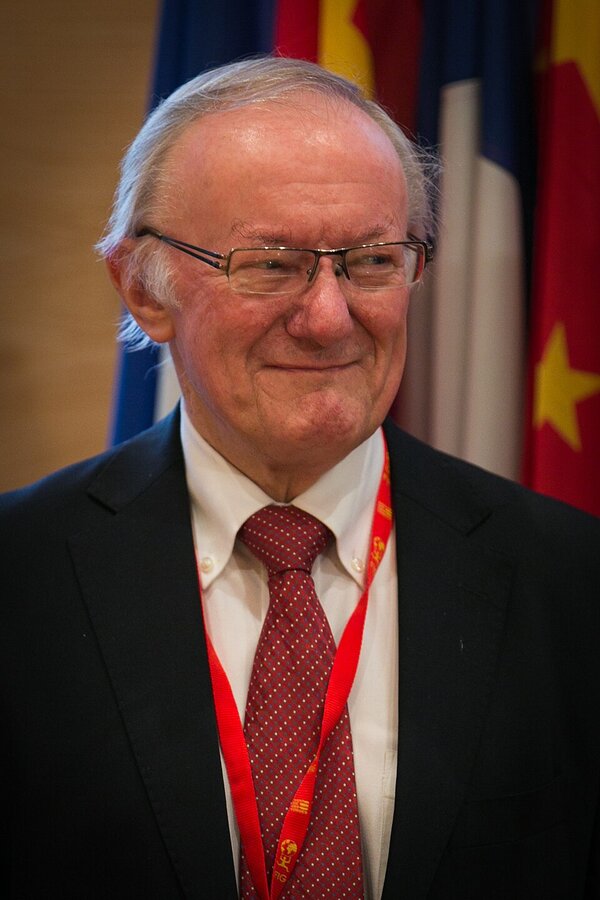
British urban modeller, Bartlett Professor of Planning at UCL and chair of CASA, whose books set out the bottom-up, complexity view of cities.
Tags: agent-based, geography, simulation, methods, edited volume