book · draft
Mirror Worlds
David Gelernter's 1991 book that first described software models of real places and institutions, fed by live data, that anyone could look into; the idea the digital twin of a place grows from.
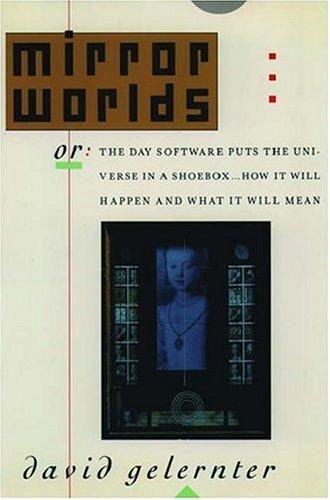
Gelernter, a computer scientist at Yale, argued that small programs were about to be joined by large public software works. The most important would be the Mirror World, a running model of a real place, such as a city, or of an organisation. Fed by a stream of live data, it would show the state of the whole at this moment. Readers could look in, move around, ask questions and try out changes.
Part of the book covers uses, such as running a hospital or following a city council. Part covers how a Mirror World could be built from the technology of the time, explained through everyday analogies. The book was first published in 1991, and the paperback followed in 1992.
Most of what the field now calls a twin is set out here, decades before the term existed: the live feed, the model of the whole, and what-if questions.
Cover via Open Library.
- authors
- David Gelernter
- publisher
- Oxford University Press
- year
- 1991
- isbn
- 9780195079067
- url
- https://openlibrary.org/works/OL937468W
produced by this organization or person

Yale computer scientist whose book Mirror Worlds described a live software model of a city or organisation, decades before the term digital twin.
cited by
-
Where the idea and the name came from: Apollo's simulators, Gelernter's Mirror Worlds, Grieves and NASA, and the step from spacecraft and factories to cities and the built environment.
Tags: origin, mirror world, software, city, history