tool · draft
GRAL
The Graz Lagrangian Model from Graz University of Technology; simulates the dispersion of pollutants and odour in built-up areas and complex terrain, including low-wind conditions and road tunnel portals.
What is reusable: unknown sourceunknown dataAPI unknownunknown participation freewareThe model system is a free download after registration on the TU Graz site, with no warranty; the pages read do not say whether the source code is published.
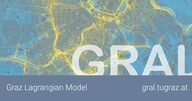
GRAL has been developed since 1999 at the Institute of Thermodynamics and Sustainable Propulsion Systems at Graz University of Technology.1 Lagrangian means it follows the paths of many individual particles of pollutant. With its companion model GRAMM it forms the GRAMM/GRAL system.1 The institute says the system is used both in research and in regulatory assessments of urban air quality.1 The model was first built for the frequent low-wind conditions of inner-Alpine basins in Austria, where wind is below 1.5 m/s for up to 90 per cent of the time.1 It handles dispersion across the full range of wind speeds and stability conditions.2
It simulates chemically non-reactive pollutants in built-up areas and complex terrain.1,2 Its features include:2
- a micro-scale flow model that accounts for buildings and building downwash, the air pulled down behind a building
- stack emissions with temperature and exit velocity
- dispersion from road tunnel portals, meeting the Austrian guideline RVS 04.02.12
- dry and wet deposition and sedimentation
- decay, such as bacteria die-off
- flow within vegetation layers.2
For smell it computes odour hours from a concentration-variance model.2 Runs can be steady-state or transient, for instance for puff releases.2
The model system is freeware, downloaded from the TU Graz site after registering with some basic details.1,3 It comes with no warranty of completeness or correctness, and the risk of correct application is the user's.3 The institute offers trainings.1
- tier
- 2
- form
- Free dispersion model
- group
- Sensory landscape
- homepage
- https://gral.tugraz.at/
helps answer this question
-
How do sound, light, smell and barriers shape a place for people and for other animals?
needed by
-
How much fine particle and traffic pollution reaches one street, judged against health guidelines, from monitors, home sensors and street-level maps.
Tags: air quality, odour, dispersion, pollution, freeware